Category: Microsoft Visual Basic

  • Debugging Common Errors in VB6 with Jet Back-End

    Debugging Common Errors in VB6 with Jet Back-End

    modernizing microsoft visual basic

    Debugging common errors in VB6 with a Jet back-end can feel like navigating a maze of legacy code, aging database structures, and unpredictable runtime behavior. These classic systems still power critical operations for many businesses, but they are notoriously difficult to maintain, especially when VB Jet errors or DAO runtime issues surface without warning.

    This guide focuses on practical Access backend debugging, explaining why Jet failures occur and how to debug VB6 + Jet errors using a structured, repeatable approach.


    Whether you’re diagnosing runtime 3197, runtime 3343, persistent “Cannot open database” failures, or deeper schema-related problems, the goal is to help you identify root causes and restore stability.

    Why Debugging Common Errors in VB6 with a Jet Back-End Is So Difficult

    Debugging VB6 applications backed by Jet presents unique challenges due to how tightly these systems are coupled. Visual Basic 6 relies heavily on:

    • The Jet database engine
    • DAO (Data Access Objects)
    • Direct file-level access to Access database files

    Every time VB6 executes DAO.OpenRecordset, Jet must interpret schema definitions, manage locks, maintain indexes, and preserve relational integrity. When any part of this chain breaks down, developers may encounter:

    • Runtime mismatches
    • Schema conflicts
    • Record locking errors
    • Access database corruption
    • Network path instability

    This tight coupling is why debugging common errors in VB6 with a Jet back-end often requires deeper investigation than modern, server-based systems.

    Most Common VB6 + Jet Back-End Errors

    Below are the most frequent failure points encountered during Access backend debugging.

    1. “Cannot open database” — Causes in VB6

    This is one of the most common and disruptive Jet-related errors. Typical causes include:

    • Corrupted Access (.mdb) files
    • Databases exceeding Jet’s 2 GB size limit
    • Schema conflicts following structural changes
    • Incorrect permissions or file-locking issues
    • Unstable network paths to shared databases

    Because VB6 interacts directly with database files—often across a network—even small disruptions can trigger major VB Jet errors. Debugging almost always begins with verifying database integrity.

    2. Runtime Error 3197 — “The Jet database engine stopped the process…”

    If you’re trying to fix runtime 3197 in Access, it’s usually caused by:

    • Multiple users editing the same record simultaneously
    • DAO recordsets opened without explicit locking modes
    • Cached recordsets becoming stale
    • Updates performed inside loops without refreshing baseline values

    This error is common in multi-user environments and is a frequent reason organizations seek specialized VB6 debugging support.

    3. Runtime Error 3343 — “Unrecognized Database Format”

    This error indicates that the Jet engine cannot interpret the database file. Common causes include:

    • Opening a database saved in a newer Jet or ACE version
    • Corruption in the database file header
    • Jet/DAO binary mismatches between machines
    • Unsupported structural changes

    While Compact & Repair may temporarily resolve the issue, long-term stability depends on enforcing version consistency across environments.

    4. DAO Runtime Issues and OpenRecordset Failures

    Many persistent Jet problems stem from incorrect DAO usage. Common pitfalls include:

    • Using SQL reserved words without brackets
    • Data type mismatches between code and schema
    • Leaving DAO objects open across operations
    • Interrupted or incomplete transactions

    When debugging common errors in VB6 with a Jet back-end, DAO.OpenRecordset calls and object cleanup patterns should always be reviewed closely.

    How to Debug VB6 + Jet Errors: A Step-by-Step Methodology

    The following workflow reflects how experienced developers troubleshoot VB Jet errors efficiently.

    Step 1: Reproduce the Error with Detailed Logging

    VB6 lacks modern diagnostics, making logging essential. Capture details such as:

    • SQL statements executed through DAO
    • Recordset open modes
    • File paths and permissions
    • Locking and workspace settings
    • Exact Jet error numbers
    • User actions leading up to the failure

    Reliable logging turns intermittent issues into reproducible events.

    Step 2: Verify Access Database Integrity

    A significant portion of VB Jet errors originate in the database file itself. Always confirm:

    • Compact & Repair completes successfully
    • File size remains within Jet limits
    • Indexes are valid and intact
    • Relationships are properly enforced
    • Jet versions are consistent across users

    Never assume a database is healthy without validation.

    Step 3: Validate DAO Usage Patterns

    Jet is highly sensitive to how DAO objects are managed. Review:

    • Recordset types (Snapshot vs. Dynaset)
    • Explicit closing of all objects
    • Proper transaction handling
    • Consistent use of Set rs = Nothing
    • Safe and validated SQL syntax

    Good DAO hygiene resolves many recurring runtime issues.

    Step 4: Detect Schema Drift

    Differences between development and production schemas can lead to unpredictable failures, including:

    • Fields present in one environment but not another
    • Data type mismatches
    • Undeployed index changes
    • Renamed tables or fields

    Schema comparisons are essential when debugging common errors in VB6 with a Jet back-end.

    Step 5: Control the Runtime Environment

    Jet and DAO depend heavily on operating system DLL versions. Inconsistent environments can result in:

    • Random crashes
    • “Unrecognized database format” errors
    • Connection failures
    • Performance degradation

    Maintaining a controlled runtime environment helps prevent recurring Jet-related issues.

    How Do I Troubleshoot VB Jet Applications?

    If you’re asking how to troubleshoot VB Jet apps effectively, follow this sequence:

    • Confirm database availability and integrity
    • Log all DAO operations
    • Reproduce errors in a staging environment
    • Eliminate schema drift
    • Validate environment consistency
    • Repair or refactor Jet queries
    • Re-test under production-like conditions

    This approach makes debugging predictable and repeatable.
    modernization for microsoft visual basic

    When In-House Debugging Isn’t Enough

    Legacy VB6 + Jet systems require specialized knowledge. If your team is dealing with any of the below, external expertise may be necessary:

    • Persistent VB Jet errors
    • DAO runtime failures
    • Access database corruption
    • Environment inconsistencies
    • Performance bottlenecks
    • High-risk downtime

    Wizmo provides:

    • Professional VB6 debugging services
    • Jet runtime error resolution workflows
    • Database repair and stabilization
    • Modernization planning for legacy VB6 applications

    When reliability matters, Wizmo helps organizations stabilize and extend the life of mission-critical systems.

    A Proactive Approach to VB6 + Jet Troubleshooting

    Successfully debugging common errors in VB6 with a Jet back-end requires a clear understanding of how VB6, Jet, DAO, and Access interact at every layer. With a structured methodology, teams can resolve:

    • VB Jet errors
    • DAO runtime issues
    • Schema conflicts
    • Access corruption
    • Version mismatches

    And when internal resources reach their limits, specialized support can make the difference between ongoing instability and long-term reliability.

  • Enabling Cloud Access for VB and Jet Back-End Apps

    cloud access for microsoft visual basic

    Across industries, finance, manufacturing, distribution, healthcare, logistics, and beyond, organizations still rely on long-standing Visual Basic 6 (VB6) applications paired with Microsoft Access Jet databases. Though decades old, these systems continue to power critical workflows. They are trusted, customized over many years, and deeply integrated into day-to-day operations.

    But today’s workforce expects capabilities these legacy systems were never built for:

    • Secure remote access
    • High availability
    • Multi-location support
    • Cloud-level scalability

    This leads many organizations to ask: Is enabling cloud access for VB and Jet back-end apps truly possible?


    Yes—it is possible.


    When done correctly, enabling cloud access for VB and Jet back-end apps improves performance, reliability, and security while removing the burden of maintaining aging on-premises servers.

    Providers like Wizmo specialize in transforming VB6 and Jet applications into modern, cloud-hosted environments—without rewriting the software or disrupting business operations.

    This guide explains how enabling cloud access for VB and Jet back-end apps works, the challenges involved, and best practices for achieving a stable transition.

    Why Organizations Are Prioritizing Cloud Access for VB and Jet Apps

    VB6 and Jet applications were designed for environments where everything ran locally. These systems depend on:

    • Windows-based runtime environments
    • Local or LAN-level file access
    • Real-time database locking
    • Predictable, low-latency communication

    Modern business requirements conflict with these assumptions. Organizations now require:

    • VB6 remote access for distributed teams
    • The ability to deploy Access databases online securely
    • Flexible options to host Jet databases on cloud platforms
    • Clear answers to whether VB and Access apps can run in the cloud

    Because downtime, performance issues, and corruption risks are unacceptable, enabling cloud access for VB and Jet back-end apps has become a business continuity priority, not just a modernization initiative.

    Challenges When Moving VB6 and Jet Applications to the Cloud

    Before exploring best practices, it’s important to understand why VB6 and Jet systems fail in generic cloud environments.

    Jet Databases Require Full File-Level Access

    The Jet database engine expects direct file-level access. Cloud sync tools such as OneDrive, Dropbox, Google Drive, or object storage platforms do not support:

    • Multi-user file locking
    • Synchronous writes
    • Real-time page-level coordination
    • High-speed transactions

    As a result, organizations often experience:

    • Corrupted Jet databases
    • Broken lock files
    • Unstable multi-user performance
    • Sluggish application behavior

    This is why enabling cloud access for VB and Jet back-end apps requires a Windows server environment optimized specifically for Jet.

    VB6 Runtime Dependency Complexity

    VB6 applications rely on:

    • COM components
    • Registered DLLs
    • OCX controls
    • Windows system APIs

    These dependencies cannot run safely in Linux containers or generic cloud platforms. A structured Windows environment is required for stability.

    Jet Is Extremely Sensitive to Latency

    Even small latency spikes can:

    • Break transactions
    • Corrupt database pages
    • Crash multi-user sessions

    VPNs, mapped drives, and file-sync tools cannot reliably support Jet. Successful cloud access requires an environment engineered to replicate LAN-level performance in the cloud.

    How to Successfully Enable Cloud Access for VB and Jet Back-End Apps

    Below are proven methods used by specialized providers to modernize VB6 and Jet systems safely.

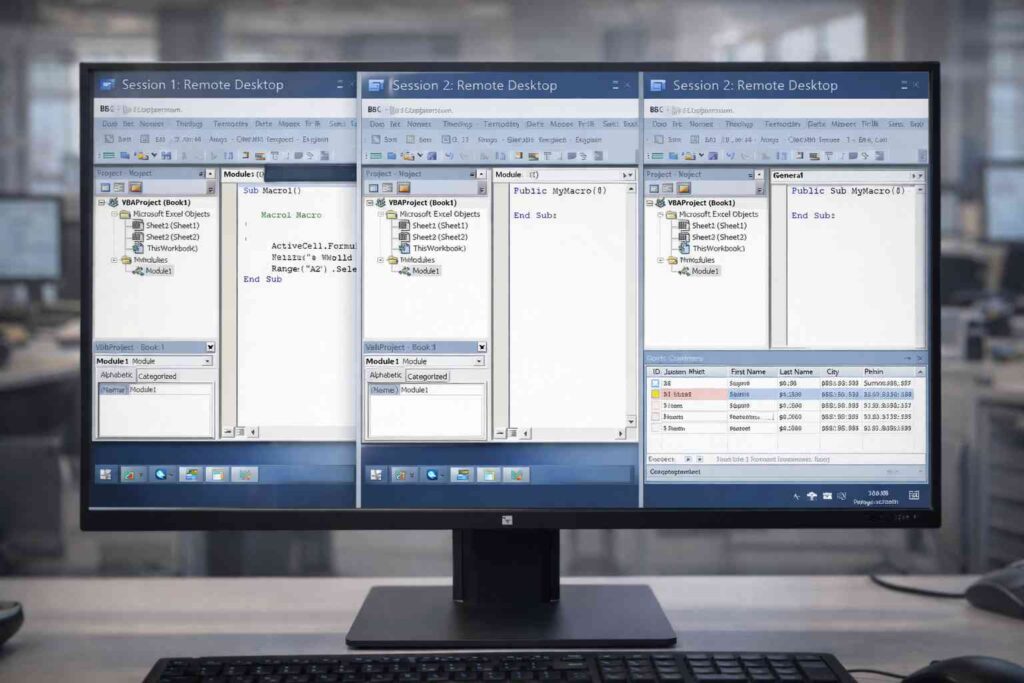
    Host the Application in a Virtual Desktop or RDS Environment

    One of the most effective approaches is hosting the application using:

    • Virtual Desktop Infrastructure (VDI)
    • Remote Desktop Services (RDS)
    • Managed Windows cloud servers

    In this model:

    • Users connect through secure RDP or portal access
    • The VB6 application and Jet database run in the same environment
    • Latency issues are eliminated

    Key benefits include:

    • Near-zero corruption risk
    • Secure, centralized access
    • Consistent runtime behavior
    • Reduced IT overhead
    • Optimized compatibility for VB6

    VDI environments replicate the conditions Jet was designed for—within the cloud.

    Maintain the Jet Back-End on a Cloud-Optimized File Share

    Another critical requirement is hosting the Jet database on a properly engineered file share that supports:

    • High-speed SSD storage
    • Proper file locking
    • Automated backups and snapshots
    • Redundant power and networking
    • Controlled multi-user concurrency

    This approach allows organizations to deploy Access databases online while preserving legacy functionality.


    How do I host a Jet database online?
    By placing it in a secure, Windows-based environment optimized for Jet’s file-level behavior.

    Deploy VB6 Applications via Cloud Application Hosting

    Instead of installing VB6 applications locally, cloud providers deploy them on managed Windows servers.

    Advantages include:

    • Identical runtime environments for all users
    • Centralized deployment and updates
    • Improved performance and reliability
    • Seamless VB6 remote access

    This ensures the front-end and back-end operate as a unified system.

    Hosting on Azure, AWS, or Specialized Platforms

    Many organizations aim to host Jet databases on Azure or AWS, but default configurations are not designed for Jet’s requirements.


    Specialized providers bridge this gap by offering:

    • Jet-optimized Windows environments
    • Smart file-locking support
    • High-availability infrastructure
    • Continuous monitoring
    • Expert migration guidance

    This significantly reduces risk for mission-critical systems.

    How to Run a VB App with an Access Back-End in the Cloud

    A common question is: How do I run a VB app with an Access back-end in the cloud?

    The process typically includes:

    • Migrating the Jet database to a secure cloud-hosted file share
    • Installing the VB6 application on a Windows cloud server
    • Configuring authentication and permissions
    • Providing RDP or virtual desktop access
    • Testing concurrency, locking, and performance
    • Enabling monitoring and automated backups

    This approach enables cloud access without rewriting the application.

    jet back-end and visual basic cloud access

    Benefits of Enabling Cloud Access for VB and Jet Back-End Apps

    • Secure, consistent access for remote users
    • Improved Jet performance in optimized environments
    • Elimination of on-prem server maintenance
    • Simple user scaling and capacity expansion
    • No application rewrites required

    How Wizmo Supports Cloud Transitions for VB and Jet Apps

    Wizmo supports organizations with:

    • Cloud hosting for Jet applications
    • VB6 remote deployment services
    • Application modernization consulting
    • End-to-end migration planning

    Legacy VB6 and Jet applications remain mission-critical for many organizations. With the right cloud hosting strategy, these systems can be modernized safely, without downtime or costly rewrites.


    By leveraging virtual desktops, Jet-compatible file shares, and expert cloud environments, organizations can achieve modern performance while preserving their existing investments.

  • Modernizing Visual Basic + Jet Deployments: The Complete Migration Roadmap

    modernizing microsoft visual basic

    Organizations still running business-critical VB6 applications or Jet-based back-ends are feeling the pressure of rapid technological change. Users expect secure cloud access, real-time performance, and modern interfaces—yet Jet, DAO, and VB6 struggle to keep pace.


    As technical debt grows, the question is no longer if modernization is necessary. The real decision is how to begin modernizing Visual Basic + Jet deployments without disrupting business operations.

    The good news: modernization doesn’t have to be risky or chaotic. With the right approach, the right tools, and expert support, organizations can modernize Visual Basic + Jet deployments while preserving business logic and improving performance, scalability, and security.


    This roadmap explains how teams:

    • Move from VB6 to VB.NET
    • Transition Access and Jet to SQL-based platforms
    • Replace DAO with ADO.NET
    • Execute a structured, low-risk migration from Jet

    Why Modernizing Visual Basic + Jet Deployments Is Mission-Critical

    Legacy VB6 and Jet-based applications once served organizations well, but modern environments demand capabilities Jet was never designed to support. Organizations continuing to rely on Jet commonly face:

    • File-size limitations that restrict growth
    • Concurrency conflicts under multi-user access
    • Security gaps without modern encryption standards
    • Network instability caused by file-based architecture
    • OS compatibility issues as Windows evolves

    Modernizing Visual Basic + Jet deployments is now essential for operational stability—not just technical improvement.

    modernization for microsoft visual basic

    Once modernized, organizations gain access to:

    • Cloud-ready SQL Server or Azure SQL engines
    • Role-based access and modern identity integration
    • Transactional consistency
    • High availability and failover options
    • Compatibility with CI/CD and DevOps pipelines
    • A flexible foundation for future enhancements

    Modernization represents a long-term strategic shift, not a simple technology refresh.

    Choosing Your Path: What Replaces Jet Back-Ends?

    During planning, one question surfaces early: What replaces Jet back-ends? The answer depends on scale, architecture, and business goals.

    SQL Server or SQL Server Express

    Often the most natural successor to Jet. These platforms provide:

    • Strong concurrency handling
    • High data integrity
    • Advanced indexing
    • Encrypted connections
    • Transaction-level reliability

    For most teams modernizing Visual Basic + Jet deployments, SQL Server or SQL Server Express becomes the primary destination.

    Azure SQL and Other Cloud Databases

    Best suited for organizations moving toward remote access or SaaS delivery. Benefits include:

    • Automated backups and services
    • Global availability
    • Elastic scaling
    • Reduced infrastructure maintenance

    Hybrid Migration Approaches

    Some organizations modernize gradually:

    • VB.NET first, Jet later
    • Or SQL Server first, VB.NET later

    At the application level, VB.NET offers a natural transition for VB6 development teams. For data access, migrating from DAO to ADO.NET improves security, concurrency, and efficiency.

    How to Begin Modernizing Visual Basic + Jet Deployments

    If you’re asking, “How do I upgrade my VB and Access app?”, successful modernization typically follows a proven sequence.

    Assessment & Discovery

    Before modernization begins, teams document:

    • All Jet file locations and dependencies
    • VB6 forms, modules, classes, and controls
    • External integrations and APIs
    • Business-critical logic
    • Concurrency, performance, and scalability requirements

    This assessment becomes the blueprint for modernization and prevents costly surprises.

    Designing the Target Architecture

    With the legacy footprint defined, the modern architecture is designed:

    • VB6 → VB.NET
    • Jet tables → SQL Server or SQL Server Express
    • Jet queries → SQL views or stored procedures
    • DAO → ADO.NET
    • On-prem authentication → Azure AD or hybrid identity
    • Local storage → Cloud or hybrid databases

    This phase aligns technical decisions with business priorities.

    Step-by-Step Migration from Jet

    Modernizing Visual Basic + Jet deployments works best with a structured, methodical approach.

    Step 1: Jet Schema Conversion

    • Tables, indexes, relationships, and constraints recreated in SQL Server
    • Jet queries re-engineered as views or stored procedures

    Step 2: Data Migration & Verification

    • Data exported from Jet
    • Transformed and cleaned
    • Validated and imported into SQL Server

    Step 3: DAO to ADO.NET Transition

    This transition enables:

    • Secure connectivity
    • Concurrency management
    • Transaction support
    • Connection pooling

    Step 4: VB6 to VB.NET Modernization

    Depending on complexity, this may include:

    • Syntax updates
    • Interface rebuilds
    • Logic refactoring
    • Framework adoption
    • Code restructuring for maintainability

    Step 5: Quality Assurance & Testing

    Testing typically includes:

    • Functional validation
    • Load and concurrency testing
    • Data accuracy checks
    • User acceptance testing

    Step 6: Deployment & Optimization

    Post-deployment improvements often include:

    • CI/CD pipelines
    • Monitoring and logging
    • Performance tuning
    • High availability configurations

    This sequence significantly reduces risk during modernization.

    Common Questions About Modernizing Visual Basic + Jet Deployments

    How do I upgrade my VB and Access app?

    By migrating VB6 to VB.NET, moving Jet data to SQL Server, replacing DAO with ADO.NET, and deploying a modern architecture, ideally with expert guidance.

    SQL Server, SQL Server Express, Azure SQL, or other enterprise-grade relational databases.

    Why Work With Experts in VB Modernization Consulting?

    visual basic modernization consulting
    Modernizing Visual Basic + Jet deployments involves:
    • Application refactoring
    • Database restructuring
    • Architecture redesign
    • Cloud readiness planning
    • Data integrity safeguards
    • Risk mitigation
    Experienced VB modernization consulting helps reduce downtime and protect critical business logic.
    Wizmo specializes in:
    • Jet to SQL migration services
    • VB6 to VB.NET modernization
    • Secure hosting for legacy applications
    • End-to-end modernization project management

    When Your Organization Should Consider a Jet to SQL Migration

    Modernization becomes necessary when:

    • Applications fail under multi-user load
    • Jet cannot meet security or compliance requirements
    • Modern identity management is required
    • Remote access is mandatory
    • Downtime or data loss is unacceptable
    • The VB6 codebase limits growth

    Modernizing Visual Basic + Jet deployments unlocks scalability, performance, and long-term resilience. Whether your goal is upgrading VB6 to .NET, transitioning Access to SQL, or preparing for cloud deployment, the right partner can make the process stable and predictable.


    If you’re ready to modernize with confidence, explore Wizmo’s expert migration services.

  • Choosing the Right Architecture for VB and Access Systems

    architecture of microsoft visual basic

    Choosing the right architecture for VB and Access systems has become one of the most important decisions organizations must make as they maintain or modernize their legacy applications. For decades, developers deployed Microsoft Visual Basic systems using a single, combined Access file. It worked, mostly, because networks were simpler, user counts were low, and Jet-based systems weren’t under the pressure they face today.


    This article explains the differences, benefits, risks, and how to decide which architecture fits your Visual Basic and Access environment today.

    Understanding the Core Decision:
    Split Access Database or Combined File?

    The primary debate, split or combined Access architecture, comes down to how Jet handles data. Jet is a file-based engine, not a server-based engine. That means every request your VB code makes is processed directly against a file rather than a database server.


    Because of that, the architecture you choose determines how traffic moves, how much data flows across the network, and how reliably files behave under stress.

    The Combined Architecture

    A combined architecture places everything into a single .mdb or .accdb file, including:

    • All Access tables and data
    • Embedded Access objects
    • Logic connected to the VB front-end

    This was the default approach for years because it was simple to deploy: copy the file, run the VB app, and you’re done. However, combined architecture depends entirely on file-based sharing, which exposes the system to corruption, locking failures, and performance degradation when more than one user is involved.


    For single-user or isolated workstation environments, a combined Access file may still work. Once multi-user VB file sharing is introduced, this architecture quickly becomes a bottleneck.

    The Split Architecture (Front-End / Back-End)

    A split Access database separates program logic and user interface from the actual data:

    • Back-End (BE): tables, indexes, and stored data
    • Front-End (FE): forms, queries, modules, and linked tables

    Your VB application interacts with the FE or directly with linked tables, depending on how it is coded.


    This FE/BE structure reduces risk, improves performance, and aligns with established best practices for Jet deployment. It also forms the foundation for modern hosting and cloud strategies.


    This decision is commonly tied to search questions such as:

    • Should my VB app use a split Access database?
    • What’s the best Jet deployment setup?

    In most production environments, the answer points clearly toward a split architecture.

    Why Split Architecture Usually Wins for VB and Access Systems

    The primary reason split architecture is recommended is simple: Jet behaves more predictably when the data file is isolated. There are also deeper technical advantages that matter to any VB developer.

    Dramatically Reduced Corruption Risk

    Jet database corruption often occurs when multiple users open a single file and a network interruption occurs, or when excessive data must be transmitted.


    With a split architecture:

    • Only the BE handles data operations
    • The FE reduces file traffic
    • VB file sharing becomes more predictable

    This separation is one of the most effective Jet structure optimization strategies available.

    Improved Performance for Every VB User

    In a combined file, Jet must push large datasets across the network. With a split database, the FE processes more logic locally, reducing BE load and network traffic.

    This often eliminates long-standing, unexplained performance slowdowns.

    Easier Updates, Deployment, and Version Control

    With a combined file, updating logic requires replacing the entire database. In a split architecture, you deploy updated FE files without touching the BE. This greatly simplifies maintenance, especially during audits or modernization efforts.

    Essential for Remote, Cloud, and Hosted Environments

    As organizations move toward secure, managed hosting, such as solutions available through Wizmo, split architecture becomes essential. Cloud and hybrid environments cannot reliably support full file-based Access sharing. A split design reduces risk and enables stable, scalable hosting.

    Supports Long-Term Sustainability of VB Applications

    Many organizations maintain VB systems for 10–20 years. A split architecture helps protect that investment by reducing maintenance effort, improving database health, and aligning with future migration paths.

    When a Combined Access File Still Makes Sense

    Despite the advantages of splitting, there are valid cases where a combined architecture may still be appropriate:

    • Single-user applications with no network access
    • Standalone workstations
    • Short-lived internal utilities
    • Very simple systems with infrequent updates

    In these scenarios, Jet does not experience concurrency stress. As systems evolve, however, these advantages often disappear.

    access systems and visual basic architecture

    How VB File Sharing Influences the Architecture Decision

    Visual Basic applications interact with Access using DAO, ADO, or ODBC. Regardless of the method, Jet processes all operations at the file level.

    This means:

    • Queries pull data across the network
    • Multi-user writes can conflict
    • Network interruptions threaten file integrity

    A split Access database alleviates much of this by isolating the BE and reducing locking conflicts. This is why developers researching whether to split an Access backend for VB almost always conclude that splitting improves stability.

    Should My VB App Use a Split Access Database?

    Unless your system is strictly single-user or offline, a split architecture is typically the safest long-term choice. It improves reliability, supports modernization, and reduces corruption risk.

    If your VB application experiences:

    • Random slowdowns
    • Locking warnings
    • Corruption during multi-user operations
    • Heavy network traffic during queries

    …the underlying architecture is likely the root cause.

    How Wizmo Helps with VB and Access Architecture Decisions

    Wizmo specializes in:

    • Hosting VB + Access systems in optimized environments
    • Eliminating corruption caused by traditional file sharing
    • Providing secure, scalable infrastructure for Jet applications
    • Supporting modernization while preserving legacy functionality

    If you’re deciding whether to remain with a combined file or move to a split Access architecture, Wizmo can provide guidance tailored to your application and usage patterns.

    Making the Right Choice for VB and Access Systems

    When choosing between split and combined architectures, the deciding factors are rarely convenience; they are reliability, performance, and longevity.


    A combined file may work for simple scenarios, but for most organizations, it cannot support real-world usage. A split Access database delivers a more stable foundation for multi-user VB systems and future modernization.


    If you’re ready to stabilize your application, optimize your Jet deployment, or explore hosting options, Wizmo is well positioned to help guide your next step.

  • Why Your VB + Access App Is Slowing Down: Jet Back-End Limitations Explained

    microsoft visual basics jet back end limitations

    If you’re frustrated and asking, “Why is my VB6 and Access application slow?”, you’re not alone. Hundreds of organizations still rely on Visual Basic and Access systems built decades ago, and nearly all of them eventually face the same problem: Jet back-end limitations.

    Your VB + Access application may have worked flawlessly when your business was smaller, your data was lighter, and your network was simpler. But today’s workloads expose the underlying weaknesses of the Jet engine;  weaknesses that directly cause slow Access database performance, VB6 bottlenecks, and unpredictable system behavior.

    This guide explains exactly why your VB + Access app is slowing down, how Jet back-end limitations affect long-term performance, and what you can do to fix these issues permanently.

    Jet Back-End Limitations

    The Real Reason Your VB Application Is Slowing Down

    The Jet database engine was never designed for modern business environments. Introduced in the 1990s, Jet is a file-based database, not a server-based relational engine. That means every query, form load, and update operation forces your VB application to fetch raw file data across the network.

    This architecture creates multiple, predictable performance problems, especially as your data grows.

    File-Based Architecture Creates Immediate Bottlenecks

    Jet back-end limitations start with how data is retrieved:

    • Large reads require pulling blocks of data across the network
    • Writes trigger table-level or page-level locking
    • Multiple users multiply network traffic
    • Network latency directly slows your VB forms and queries

    SQL Server processes queries on the server. Jet does not.

    This is one of the biggest causes of slow Access database performance.

    How VB6 Bottlenecks Make Jet Back-End Limitations Worse

    Even well-written VB6 applications experience slowdown as data grows. Why? Because VB6 relies heavily on DAO and OLEDB, both tightly coupled with the Jet engine.

    DAO and OLEDB Under Modern Load

    As your dataset expands:

    • DAO collapses under large table scans
    • Older OLEDB providers struggle with concurrency
    • Locking issues lead to frozen forms and timeouts
    • Queries that once ran instantly now take minutes

    These are classic signs of Jet database performance issues. They occur not because VB6 is broken, but because its data access layers were built for smaller, simpler systems.

    Why Your VB + Access App Slows Down More Each Year

    The degradation isn’t random — it’s structural.

    Jet Cannot Handle Large or Growing Databases

    Once your Access database reaches a few hundred MB or several hundred thousand records, Jet back-end limitations become unavoidable:

    • Fragmentation grows
    • Index efficiency drops
    • Page-level locking increases
    • Corruption risk rises

    Even powerful PCs can’t compensate for a slow database engine.

    Concurrency Problems Cause Freezes and Lockouts

    Jet uses a simplistic locking model that doesn’t scale:

    • One user editing a record can block everyone
    • “Database has been placed in a state…” errors appear
    • Writes fail during peak usage
    • Forms freeze and queries stall

    This is why so many teams search for answers like: “How do I fix Jet back-end performance?”

    Network Load Becomes the Slowest Part of Your Application

    Since Jet is a file-based database, every operation, large or small, is a network event.

    As more users join:

    • Network load increases
    • Latency becomes destructive
    • Remote users suffer massive delays

    This is one of the most common answers to: “Why is my VB app slow with an Access back-end?”

    Compact & Repair Helps Only Temporarily

    While Compact & Repair reduces fragmentation, it cannot overcome built-in Jet back-end limitations. Performance will degrade again as soon as usage increases.

    Why These Problems Become More Noticeable Over Time

    When your VB + Access application was created:

    • There were fewer users
    • Data requirements were light
    • Workflows were simpler
    • Infrastructure was local

    Today, everything is heavier:

    • Data doubles every year
    • More teams depend on the application
    • Workflows have become complex
    • Remote access is common
    • Legacy desktop systems age

    These changes expose Jet back-end limitations relentlessly, causing the slowdowns you see now.

    These changes expose Jet back-end limitations relentlessly, causing the slowdowns you see now.

    How to Fix Jet Back-End Limitations

    You have three practical paths forward:

    Option 1: Jet Optimization & Visual Basic Performance Tuning (Short-Term Fix)

    This approach improves performance but does not eliminate the root problems.


    Short-term Jet optimization includes:

    • Refactoring inefficient queries
    • Reducing DAO usage
    • Rebuilding or optimizing indexes
    • Splitting Access front-end and back-end
    • Updating OLEDB providers
    • Minimizing unnecessary table scans

    Jet database optimization services can extend the system’s life temporarily, but Jet back-end limitations will eventually resurface.

    Option 2: Upgrade to SQL Server (Most Popular, High-Impact Fix)

    This is the fastest, most cost-effective solution. You keep your VB6 front-end (for now) but replace the Jet database with SQL Server.


    Benefits include:

    • 5×–20× faster performance
    • True concurrency
    • No file-based data transfers
    • Greater stability and reliability
    • Better security
    • Massive scalability

    This upgrade removes the core Jet back-end limitations while minimizing disruption.

    Option 3: Full Modernization of Your System (Best Long-Term Strategy)

    If your VB + Access system is business-critical, modernization ensures long-term viability.


    A modernized system offers:

    • Browser or mobile access
    • Cloud-ready deployment
    • Scalable SQL or cloud databases
    • Easy maintenance
    • Modern UI/UX
    • Long-term reliability

    This approach eliminates all Jet back-end limitations permanently.

    How Wizmo Helps Address Jet Back-End Limitations

    Wizmo specializes in improving, migrating, and modernizing VB6 and Access systems. Whether you need targeted performance tuning, a Jet-to-SQL Server migration, or full system modernization, Wizmo helps organizations move forward with clarity and minimal disruption.

    Wizmo supports:

    • Jet back-end performance optimization
    • Jet-to-SQL Server migrations
    • Full VB6 system modernization
    • Visual Basic performance tuning
    • Cloud architecture consulting
    • Jet database optimization services
    jet back end limitations for microsoft visual basic

    Choosing the Right Path Forward

    Now that you understand why your VB + Access application is slowing down, the next step is choosing the right path: optimize, migrate, or modernize.


    Whatever direction makes sense for your system, Wizmo can help you address Jet back-end limitations and plan a stable, future-ready solution.