Blog

  • Debugging Common Errors in VB6 with Jet Back-End

    Debugging Common Errors in VB6 with Jet Back-End

    modernizing microsoft visual basic

    Debugging common errors in VB6 with a Jet back-end can feel like navigating a maze of legacy code, aging database structures, and unpredictable runtime behavior. These classic systems still power critical operations for many businesses, but they are notoriously difficult to maintain, especially when VB Jet errors or DAO runtime issues surface without warning.

    This guide focuses on practical Access backend debugging, explaining why Jet failures occur and how to debug VB6 + Jet errors using a structured, repeatable approach.


    Whether you’re diagnosing runtime 3197, runtime 3343, persistent “Cannot open database” failures, or deeper schema-related problems, the goal is to help you identify root causes and restore stability.

    Why Debugging Common Errors in VB6 with a Jet Back-End Is So Difficult

    Debugging VB6 applications backed by Jet presents unique challenges due to how tightly these systems are coupled. Visual Basic 6 relies heavily on:

    • The Jet database engine
    • DAO (Data Access Objects)
    • Direct file-level access to Access database files

    Every time VB6 executes DAO.OpenRecordset, Jet must interpret schema definitions, manage locks, maintain indexes, and preserve relational integrity. When any part of this chain breaks down, developers may encounter:

    • Runtime mismatches
    • Schema conflicts
    • Record locking errors
    • Access database corruption
    • Network path instability

    This tight coupling is why debugging common errors in VB6 with a Jet back-end often requires deeper investigation than modern, server-based systems.

    Most Common VB6 + Jet Back-End Errors

    Below are the most frequent failure points encountered during Access backend debugging.

    1. “Cannot open database” — Causes in VB6

    This is one of the most common and disruptive Jet-related errors. Typical causes include:

    • Corrupted Access (.mdb) files
    • Databases exceeding Jet’s 2 GB size limit
    • Schema conflicts following structural changes
    • Incorrect permissions or file-locking issues
    • Unstable network paths to shared databases

    Because VB6 interacts directly with database files—often across a network—even small disruptions can trigger major VB Jet errors. Debugging almost always begins with verifying database integrity.

    2. Runtime Error 3197 — “The Jet database engine stopped the process…”

    If you’re trying to fix runtime 3197 in Access, it’s usually caused by:

    • Multiple users editing the same record simultaneously
    • DAO recordsets opened without explicit locking modes
    • Cached recordsets becoming stale
    • Updates performed inside loops without refreshing baseline values

    This error is common in multi-user environments and is a frequent reason organizations seek specialized VB6 debugging support.

    3. Runtime Error 3343 — “Unrecognized Database Format”

    This error indicates that the Jet engine cannot interpret the database file. Common causes include:

    • Opening a database saved in a newer Jet or ACE version
    • Corruption in the database file header
    • Jet/DAO binary mismatches between machines
    • Unsupported structural changes

    While Compact & Repair may temporarily resolve the issue, long-term stability depends on enforcing version consistency across environments.

    4. DAO Runtime Issues and OpenRecordset Failures

    Many persistent Jet problems stem from incorrect DAO usage. Common pitfalls include:

    • Using SQL reserved words without brackets
    • Data type mismatches between code and schema
    • Leaving DAO objects open across operations
    • Interrupted or incomplete transactions

    When debugging common errors in VB6 with a Jet back-end, DAO.OpenRecordset calls and object cleanup patterns should always be reviewed closely.

    How to Debug VB6 + Jet Errors: A Step-by-Step Methodology

    The following workflow reflects how experienced developers troubleshoot VB Jet errors efficiently.

    Step 1: Reproduce the Error with Detailed Logging

    VB6 lacks modern diagnostics, making logging essential. Capture details such as:

    • SQL statements executed through DAO
    • Recordset open modes
    • File paths and permissions
    • Locking and workspace settings
    • Exact Jet error numbers
    • User actions leading up to the failure

    Reliable logging turns intermittent issues into reproducible events.

    Step 2: Verify Access Database Integrity

    A significant portion of VB Jet errors originate in the database file itself. Always confirm:

    • Compact & Repair completes successfully
    • File size remains within Jet limits
    • Indexes are valid and intact
    • Relationships are properly enforced
    • Jet versions are consistent across users

    Never assume a database is healthy without validation.

    Step 3: Validate DAO Usage Patterns

    Jet is highly sensitive to how DAO objects are managed. Review:

    • Recordset types (Snapshot vs. Dynaset)
    • Explicit closing of all objects
    • Proper transaction handling
    • Consistent use of Set rs = Nothing
    • Safe and validated SQL syntax

    Good DAO hygiene resolves many recurring runtime issues.

    Step 4: Detect Schema Drift

    Differences between development and production schemas can lead to unpredictable failures, including:

    • Fields present in one environment but not another
    • Data type mismatches
    • Undeployed index changes
    • Renamed tables or fields

    Schema comparisons are essential when debugging common errors in VB6 with a Jet back-end.

    Step 5: Control the Runtime Environment

    Jet and DAO depend heavily on operating system DLL versions. Inconsistent environments can result in:

    • Random crashes
    • “Unrecognized database format” errors
    • Connection failures
    • Performance degradation

    Maintaining a controlled runtime environment helps prevent recurring Jet-related issues.

    How Do I Troubleshoot VB Jet Applications?

    If you’re asking how to troubleshoot VB Jet apps effectively, follow this sequence:

    • Confirm database availability and integrity
    • Log all DAO operations
    • Reproduce errors in a staging environment
    • Eliminate schema drift
    • Validate environment consistency
    • Repair or refactor Jet queries
    • Re-test under production-like conditions

    This approach makes debugging predictable and repeatable.
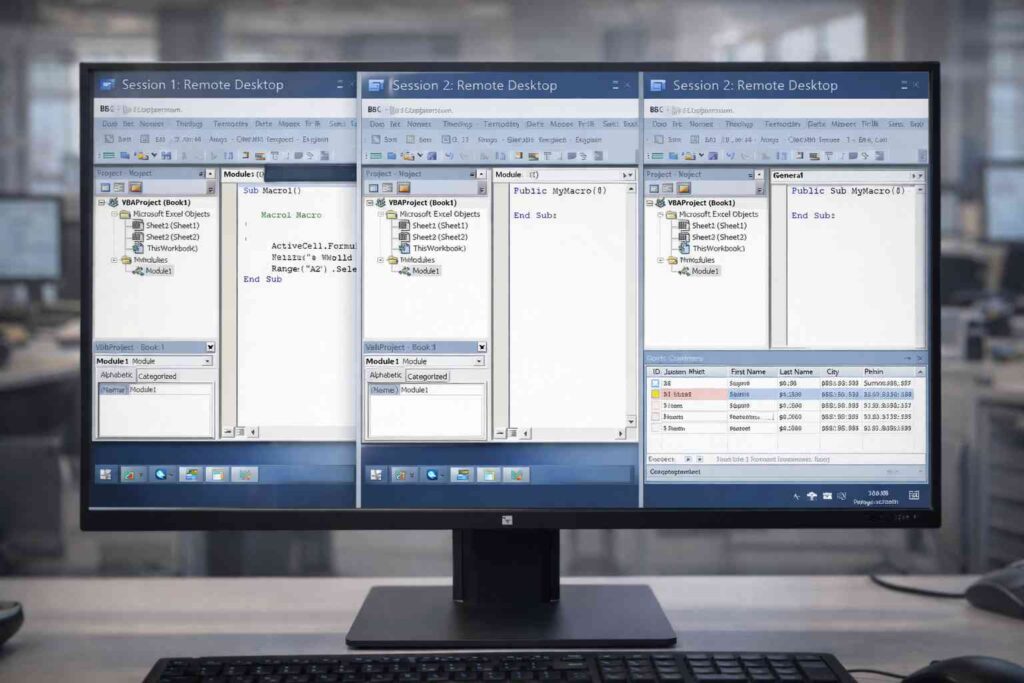
    modernization for microsoft visual basic

    When In-House Debugging Isn’t Enough

    Legacy VB6 + Jet systems require specialized knowledge. If your team is dealing with any of the below, external expertise may be necessary:

    • Persistent VB Jet errors
    • DAO runtime failures
    • Access database corruption
    • Environment inconsistencies
    • Performance bottlenecks
    • High-risk downtime

    Wizmo provides:

    • Professional VB6 debugging services
    • Jet runtime error resolution workflows
    • Database repair and stabilization
    • Modernization planning for legacy VB6 applications

    When reliability matters, Wizmo helps organizations stabilize and extend the life of mission-critical systems.

    A Proactive Approach to VB6 + Jet Troubleshooting

    Successfully debugging common errors in VB6 with a Jet back-end requires a clear understanding of how VB6, Jet, DAO, and Access interact at every layer. With a structured methodology, teams can resolve:

    • VB Jet errors
    • DAO runtime issues
    • Schema conflicts
    • Access corruption
    • Version mismatches

    And when internal resources reach their limits, specialized support can make the difference between ongoing instability and long-term reliability.

  • Enabling Cloud Access for VB and Jet Back-End Apps

    cloud access for microsoft visual basic

    Across industries, finance, manufacturing, distribution, healthcare, logistics, and beyond, organizations still rely on long-standing Visual Basic 6 (VB6) applications paired with Microsoft Access Jet databases. Though decades old, these systems continue to power critical workflows. They are trusted, customized over many years, and deeply integrated into day-to-day operations.

    But today’s workforce expects capabilities these legacy systems were never built for:

    • Secure remote access
    • High availability
    • Multi-location support
    • Cloud-level scalability

    This leads many organizations to ask: Is enabling cloud access for VB and Jet back-end apps truly possible?


    Yes—it is possible.


    When done correctly, enabling cloud access for VB and Jet back-end apps improves performance, reliability, and security while removing the burden of maintaining aging on-premises servers.

    Providers like Wizmo specialize in transforming VB6 and Jet applications into modern, cloud-hosted environments—without rewriting the software or disrupting business operations.

    This guide explains how enabling cloud access for VB and Jet back-end apps works, the challenges involved, and best practices for achieving a stable transition.

    Why Organizations Are Prioritizing Cloud Access for VB and Jet Apps

    VB6 and Jet applications were designed for environments where everything ran locally. These systems depend on:

    • Windows-based runtime environments
    • Local or LAN-level file access
    • Real-time database locking
    • Predictable, low-latency communication

    Modern business requirements conflict with these assumptions. Organizations now require:

    • VB6 remote access for distributed teams
    • The ability to deploy Access databases online securely
    • Flexible options to host Jet databases on cloud platforms
    • Clear answers to whether VB and Access apps can run in the cloud

    Because downtime, performance issues, and corruption risks are unacceptable, enabling cloud access for VB and Jet back-end apps has become a business continuity priority, not just a modernization initiative.

    Challenges When Moving VB6 and Jet Applications to the Cloud

    Before exploring best practices, it’s important to understand why VB6 and Jet systems fail in generic cloud environments.

    Jet Databases Require Full File-Level Access

    The Jet database engine expects direct file-level access. Cloud sync tools such as OneDrive, Dropbox, Google Drive, or object storage platforms do not support:

    • Multi-user file locking
    • Synchronous writes
    • Real-time page-level coordination
    • High-speed transactions

    As a result, organizations often experience:

    • Corrupted Jet databases
    • Broken lock files
    • Unstable multi-user performance
    • Sluggish application behavior

    This is why enabling cloud access for VB and Jet back-end apps requires a Windows server environment optimized specifically for Jet.

    VB6 Runtime Dependency Complexity

    VB6 applications rely on:

    • COM components
    • Registered DLLs
    • OCX controls
    • Windows system APIs

    These dependencies cannot run safely in Linux containers or generic cloud platforms. A structured Windows environment is required for stability.

    Jet Is Extremely Sensitive to Latency

    Even small latency spikes can:

    • Break transactions
    • Corrupt database pages
    • Crash multi-user sessions

    VPNs, mapped drives, and file-sync tools cannot reliably support Jet. Successful cloud access requires an environment engineered to replicate LAN-level performance in the cloud.

    How to Successfully Enable Cloud Access for VB and Jet Back-End Apps

    Below are proven methods used by specialized providers to modernize VB6 and Jet systems safely.

    Host the Application in a Virtual Desktop or RDS Environment

    One of the most effective approaches is hosting the application using:

    • Virtual Desktop Infrastructure (VDI)
    • Remote Desktop Services (RDS)
    • Managed Windows cloud servers

    In this model:

    • Users connect through secure RDP or portal access
    • The VB6 application and Jet database run in the same environment
    • Latency issues are eliminated

    Key benefits include:

    • Near-zero corruption risk
    • Secure, centralized access
    • Consistent runtime behavior
    • Reduced IT overhead
    • Optimized compatibility for VB6

    VDI environments replicate the conditions Jet was designed for—within the cloud.

    Maintain the Jet Back-End on a Cloud-Optimized File Share

    Another critical requirement is hosting the Jet database on a properly engineered file share that supports:

    • High-speed SSD storage
    • Proper file locking
    • Automated backups and snapshots
    • Redundant power and networking
    • Controlled multi-user concurrency

    This approach allows organizations to deploy Access databases online while preserving legacy functionality.


    How do I host a Jet database online?
    By placing it in a secure, Windows-based environment optimized for Jet’s file-level behavior.

    Deploy VB6 Applications via Cloud Application Hosting

    Instead of installing VB6 applications locally, cloud providers deploy them on managed Windows servers.

    Advantages include:

    • Identical runtime environments for all users
    • Centralized deployment and updates
    • Improved performance and reliability
    • Seamless VB6 remote access

    This ensures the front-end and back-end operate as a unified system.

    Hosting on Azure, AWS, or Specialized Platforms

    Many organizations aim to host Jet databases on Azure or AWS, but default configurations are not designed for Jet’s requirements.


    Specialized providers bridge this gap by offering:

    • Jet-optimized Windows environments
    • Smart file-locking support
    • High-availability infrastructure
    • Continuous monitoring
    • Expert migration guidance

    This significantly reduces risk for mission-critical systems.

    How to Run a VB App with an Access Back-End in the Cloud

    A common question is: How do I run a VB app with an Access back-end in the cloud?

    The process typically includes:

    • Migrating the Jet database to a secure cloud-hosted file share
    • Installing the VB6 application on a Windows cloud server
    • Configuring authentication and permissions
    • Providing RDP or virtual desktop access
    • Testing concurrency, locking, and performance
    • Enabling monitoring and automated backups

    This approach enables cloud access without rewriting the application.

    jet back-end and visual basic cloud access

    Benefits of Enabling Cloud Access for VB and Jet Back-End Apps

    • Secure, consistent access for remote users
    • Improved Jet performance in optimized environments
    • Elimination of on-prem server maintenance
    • Simple user scaling and capacity expansion
    • No application rewrites required

    How Wizmo Supports Cloud Transitions for VB and Jet Apps

    Wizmo supports organizations with:

    • Cloud hosting for Jet applications
    • VB6 remote deployment services
    • Application modernization consulting
    • End-to-end migration planning

    Legacy VB6 and Jet applications remain mission-critical for many organizations. With the right cloud hosting strategy, these systems can be modernized safely, without downtime or costly rewrites.


    By leveraging virtual desktops, Jet-compatible file shares, and expert cloud environments, organizations can achieve modern performance while preserving their existing investments.

  • Modernizing Visual Basic + Jet Deployments: The Complete Migration Roadmap

    modernizing microsoft visual basic

    Organizations still running business-critical VB6 applications or Jet-based back-ends are feeling the pressure of rapid technological change. Users expect secure cloud access, real-time performance, and modern interfaces—yet Jet, DAO, and VB6 struggle to keep pace.


    As technical debt grows, the question is no longer if modernization is necessary. The real decision is how to begin modernizing Visual Basic + Jet deployments without disrupting business operations.

    The good news: modernization doesn’t have to be risky or chaotic. With the right approach, the right tools, and expert support, organizations can modernize Visual Basic + Jet deployments while preserving business logic and improving performance, scalability, and security.


    This roadmap explains how teams:

    • Move from VB6 to VB.NET
    • Transition Access and Jet to SQL-based platforms
    • Replace DAO with ADO.NET
    • Execute a structured, low-risk migration from Jet

    Why Modernizing Visual Basic + Jet Deployments Is Mission-Critical

    Legacy VB6 and Jet-based applications once served organizations well, but modern environments demand capabilities Jet was never designed to support. Organizations continuing to rely on Jet commonly face:

    • File-size limitations that restrict growth
    • Concurrency conflicts under multi-user access
    • Security gaps without modern encryption standards
    • Network instability caused by file-based architecture
    • OS compatibility issues as Windows evolves

    Modernizing Visual Basic + Jet deployments is now essential for operational stability—not just technical improvement.

    modernization for microsoft visual basic

    Once modernized, organizations gain access to:

    • Cloud-ready SQL Server or Azure SQL engines
    • Role-based access and modern identity integration
    • Transactional consistency
    • High availability and failover options
    • Compatibility with CI/CD and DevOps pipelines
    • A flexible foundation for future enhancements

    Modernization represents a long-term strategic shift, not a simple technology refresh.

    Choosing Your Path: What Replaces Jet Back-Ends?

    During planning, one question surfaces early: What replaces Jet back-ends? The answer depends on scale, architecture, and business goals.

    SQL Server or SQL Server Express

    Often the most natural successor to Jet. These platforms provide:

    • Strong concurrency handling
    • High data integrity
    • Advanced indexing
    • Encrypted connections
    • Transaction-level reliability

    For most teams modernizing Visual Basic + Jet deployments, SQL Server or SQL Server Express becomes the primary destination.

    Azure SQL and Other Cloud Databases

    Best suited for organizations moving toward remote access or SaaS delivery. Benefits include:

    • Automated backups and services
    • Global availability
    • Elastic scaling
    • Reduced infrastructure maintenance

    Hybrid Migration Approaches

    Some organizations modernize gradually:

    • VB.NET first, Jet later
    • Or SQL Server first, VB.NET later

    At the application level, VB.NET offers a natural transition for VB6 development teams. For data access, migrating from DAO to ADO.NET improves security, concurrency, and efficiency.

    How to Begin Modernizing Visual Basic + Jet Deployments

    If you’re asking, “How do I upgrade my VB and Access app?”, successful modernization typically follows a proven sequence.

    Assessment & Discovery

    Before modernization begins, teams document:

    • All Jet file locations and dependencies
    • VB6 forms, modules, classes, and controls
    • External integrations and APIs
    • Business-critical logic
    • Concurrency, performance, and scalability requirements

    This assessment becomes the blueprint for modernization and prevents costly surprises.

    Designing the Target Architecture

    With the legacy footprint defined, the modern architecture is designed:

    • VB6 → VB.NET
    • Jet tables → SQL Server or SQL Server Express
    • Jet queries → SQL views or stored procedures
    • DAO → ADO.NET
    • On-prem authentication → Azure AD or hybrid identity
    • Local storage → Cloud or hybrid databases

    This phase aligns technical decisions with business priorities.

    Step-by-Step Migration from Jet

    Modernizing Visual Basic + Jet deployments works best with a structured, methodical approach.

    Step 1: Jet Schema Conversion

    • Tables, indexes, relationships, and constraints recreated in SQL Server
    • Jet queries re-engineered as views or stored procedures

    Step 2: Data Migration & Verification

    • Data exported from Jet
    • Transformed and cleaned
    • Validated and imported into SQL Server

    Step 3: DAO to ADO.NET Transition

    This transition enables:

    • Secure connectivity
    • Concurrency management
    • Transaction support
    • Connection pooling

    Step 4: VB6 to VB.NET Modernization

    Depending on complexity, this may include:

    • Syntax updates
    • Interface rebuilds
    • Logic refactoring
    • Framework adoption
    • Code restructuring for maintainability

    Step 5: Quality Assurance & Testing

    Testing typically includes:

    • Functional validation
    • Load and concurrency testing
    • Data accuracy checks
    • User acceptance testing

    Step 6: Deployment & Optimization

    Post-deployment improvements often include:

    • CI/CD pipelines
    • Monitoring and logging
    • Performance tuning
    • High availability configurations

    This sequence significantly reduces risk during modernization.

    Common Questions About Modernizing Visual Basic + Jet Deployments

    How do I upgrade my VB and Access app?

    By migrating VB6 to VB.NET, moving Jet data to SQL Server, replacing DAO with ADO.NET, and deploying a modern architecture, ideally with expert guidance.

    SQL Server, SQL Server Express, Azure SQL, or other enterprise-grade relational databases.

    Why Work With Experts in VB Modernization Consulting?

    visual basic modernization consulting
    Modernizing Visual Basic + Jet deployments involves:
    • Application refactoring
    • Database restructuring
    • Architecture redesign
    • Cloud readiness planning
    • Data integrity safeguards
    • Risk mitigation
    Experienced VB modernization consulting helps reduce downtime and protect critical business logic.
    Wizmo specializes in:
    • Jet to SQL migration services
    • VB6 to VB.NET modernization
    • Secure hosting for legacy applications
    • End-to-end modernization project management

    When Your Organization Should Consider a Jet to SQL Migration

    Modernization becomes necessary when:

    • Applications fail under multi-user load
    • Jet cannot meet security or compliance requirements
    • Modern identity management is required
    • Remote access is mandatory
    • Downtime or data loss is unacceptable
    • The VB6 codebase limits growth

    Modernizing Visual Basic + Jet deployments unlocks scalability, performance, and long-term resilience. Whether your goal is upgrading VB6 to .NET, transitioning Access to SQL, or preparing for cloud deployment, the right partner can make the process stable and predictable.


    If you’re ready to modernize with confidence, explore Wizmo’s expert migration services.

  • Choosing the Right Architecture for VB and Access Systems

    architecture of microsoft visual basic

    Choosing the right architecture for VB and Access systems has become one of the most important decisions organizations must make as they maintain or modernize their legacy applications. For decades, developers deployed Microsoft Visual Basic systems using a single, combined Access file. It worked, mostly, because networks were simpler, user counts were low, and Jet-based systems weren’t under the pressure they face today.


    This article explains the differences, benefits, risks, and how to decide which architecture fits your Visual Basic and Access environment today.

    Understanding the Core Decision:
    Split Access Database or Combined File?

    The primary debate, split or combined Access architecture, comes down to how Jet handles data. Jet is a file-based engine, not a server-based engine. That means every request your VB code makes is processed directly against a file rather than a database server.


    Because of that, the architecture you choose determines how traffic moves, how much data flows across the network, and how reliably files behave under stress.

    The Combined Architecture

    A combined architecture places everything into a single .mdb or .accdb file, including:

    • All Access tables and data
    • Embedded Access objects
    • Logic connected to the VB front-end

    This was the default approach for years because it was simple to deploy: copy the file, run the VB app, and you’re done. However, combined architecture depends entirely on file-based sharing, which exposes the system to corruption, locking failures, and performance degradation when more than one user is involved.


    For single-user or isolated workstation environments, a combined Access file may still work. Once multi-user VB file sharing is introduced, this architecture quickly becomes a bottleneck.

    The Split Architecture (Front-End / Back-End)

    A split Access database separates program logic and user interface from the actual data:

    • Back-End (BE): tables, indexes, and stored data
    • Front-End (FE): forms, queries, modules, and linked tables

    Your VB application interacts with the FE or directly with linked tables, depending on how it is coded.


    This FE/BE structure reduces risk, improves performance, and aligns with established best practices for Jet deployment. It also forms the foundation for modern hosting and cloud strategies.


    This decision is commonly tied to search questions such as:

    • Should my VB app use a split Access database?
    • What’s the best Jet deployment setup?

    In most production environments, the answer points clearly toward a split architecture.

    Why Split Architecture Usually Wins for VB and Access Systems

    The primary reason split architecture is recommended is simple: Jet behaves more predictably when the data file is isolated. There are also deeper technical advantages that matter to any VB developer.

    Dramatically Reduced Corruption Risk

    Jet database corruption often occurs when multiple users open a single file and a network interruption occurs, or when excessive data must be transmitted.


    With a split architecture:

    • Only the BE handles data operations
    • The FE reduces file traffic
    • VB file sharing becomes more predictable

    This separation is one of the most effective Jet structure optimization strategies available.

    Improved Performance for Every VB User

    In a combined file, Jet must push large datasets across the network. With a split database, the FE processes more logic locally, reducing BE load and network traffic.

    This often eliminates long-standing, unexplained performance slowdowns.

    Easier Updates, Deployment, and Version Control

    With a combined file, updating logic requires replacing the entire database. In a split architecture, you deploy updated FE files without touching the BE. This greatly simplifies maintenance, especially during audits or modernization efforts.

    Essential for Remote, Cloud, and Hosted Environments

    As organizations move toward secure, managed hosting, such as solutions available through Wizmo, split architecture becomes essential. Cloud and hybrid environments cannot reliably support full file-based Access sharing. A split design reduces risk and enables stable, scalable hosting.

    Supports Long-Term Sustainability of VB Applications

    Many organizations maintain VB systems for 10–20 years. A split architecture helps protect that investment by reducing maintenance effort, improving database health, and aligning with future migration paths.

    When a Combined Access File Still Makes Sense

    Despite the advantages of splitting, there are valid cases where a combined architecture may still be appropriate:

    • Single-user applications with no network access
    • Standalone workstations
    • Short-lived internal utilities
    • Very simple systems with infrequent updates

    In these scenarios, Jet does not experience concurrency stress. As systems evolve, however, these advantages often disappear.

    access systems and visual basic architecture

    How VB File Sharing Influences the Architecture Decision

    Visual Basic applications interact with Access using DAO, ADO, or ODBC. Regardless of the method, Jet processes all operations at the file level.

    This means:

    • Queries pull data across the network
    • Multi-user writes can conflict
    • Network interruptions threaten file integrity

    A split Access database alleviates much of this by isolating the BE and reducing locking conflicts. This is why developers researching whether to split an Access backend for VB almost always conclude that splitting improves stability.

    Should My VB App Use a Split Access Database?

    Unless your system is strictly single-user or offline, a split architecture is typically the safest long-term choice. It improves reliability, supports modernization, and reduces corruption risk.

    If your VB application experiences:

    • Random slowdowns
    • Locking warnings
    • Corruption during multi-user operations
    • Heavy network traffic during queries

    …the underlying architecture is likely the root cause.

    How Wizmo Helps with VB and Access Architecture Decisions

    Wizmo specializes in:

    • Hosting VB + Access systems in optimized environments
    • Eliminating corruption caused by traditional file sharing
    • Providing secure, scalable infrastructure for Jet applications
    • Supporting modernization while preserving legacy functionality

    If you’re deciding whether to remain with a combined file or move to a split Access architecture, Wizmo can provide guidance tailored to your application and usage patterns.

    Making the Right Choice for VB and Access Systems

    When choosing between split and combined architectures, the deciding factors are rarely convenience; they are reliability, performance, and longevity.


    A combined file may work for simple scenarios, but for most organizations, it cannot support real-world usage. A split Access database delivers a more stable foundation for multi-user VB systems and future modernization.


    If you’re ready to stabilize your application, optimize your Jet deployment, or explore hosting options, Wizmo is well positioned to help guide your next step.

  • Why Your VB + Access App Is Slowing Down: Jet Back-End Limitations Explained

    microsoft visual basics jet back end limitations

    If you’re frustrated and asking, “Why is my VB6 and Access application slow?”, you’re not alone. Hundreds of organizations still rely on Visual Basic and Access systems built decades ago, and nearly all of them eventually face the same problem: Jet back-end limitations.

    Your VB + Access application may have worked flawlessly when your business was smaller, your data was lighter, and your network was simpler. But today’s workloads expose the underlying weaknesses of the Jet engine;  weaknesses that directly cause slow Access database performance, VB6 bottlenecks, and unpredictable system behavior.

    This guide explains exactly why your VB + Access app is slowing down, how Jet back-end limitations affect long-term performance, and what you can do to fix these issues permanently.

    Jet Back-End Limitations

    The Real Reason Your VB Application Is Slowing Down

    The Jet database engine was never designed for modern business environments. Introduced in the 1990s, Jet is a file-based database, not a server-based relational engine. That means every query, form load, and update operation forces your VB application to fetch raw file data across the network.

    This architecture creates multiple, predictable performance problems, especially as your data grows.

    File-Based Architecture Creates Immediate Bottlenecks

    Jet back-end limitations start with how data is retrieved:

    • Large reads require pulling blocks of data across the network
    • Writes trigger table-level or page-level locking
    • Multiple users multiply network traffic
    • Network latency directly slows your VB forms and queries

    SQL Server processes queries on the server. Jet does not.

    This is one of the biggest causes of slow Access database performance.

    How VB6 Bottlenecks Make Jet Back-End Limitations Worse

    Even well-written VB6 applications experience slowdown as data grows. Why? Because VB6 relies heavily on DAO and OLEDB, both tightly coupled with the Jet engine.

    DAO and OLEDB Under Modern Load

    As your dataset expands:

    • DAO collapses under large table scans
    • Older OLEDB providers struggle with concurrency
    • Locking issues lead to frozen forms and timeouts
    • Queries that once ran instantly now take minutes

    These are classic signs of Jet database performance issues. They occur not because VB6 is broken, but because its data access layers were built for smaller, simpler systems.

    Why Your VB + Access App Slows Down More Each Year

    The degradation isn’t random — it’s structural.

    Jet Cannot Handle Large or Growing Databases

    Once your Access database reaches a few hundred MB or several hundred thousand records, Jet back-end limitations become unavoidable:

    • Fragmentation grows
    • Index efficiency drops
    • Page-level locking increases
    • Corruption risk rises

    Even powerful PCs can’t compensate for a slow database engine.

    Concurrency Problems Cause Freezes and Lockouts

    Jet uses a simplistic locking model that doesn’t scale:

    • One user editing a record can block everyone
    • “Database has been placed in a state…” errors appear
    • Writes fail during peak usage
    • Forms freeze and queries stall

    This is why so many teams search for answers like: “How do I fix Jet back-end performance?”

    Network Load Becomes the Slowest Part of Your Application

    Since Jet is a file-based database, every operation, large or small, is a network event.

    As more users join:

    • Network load increases
    • Latency becomes destructive
    • Remote users suffer massive delays

    This is one of the most common answers to: “Why is my VB app slow with an Access back-end?”

    Compact & Repair Helps Only Temporarily

    While Compact & Repair reduces fragmentation, it cannot overcome built-in Jet back-end limitations. Performance will degrade again as soon as usage increases.

    Why These Problems Become More Noticeable Over Time

    When your VB + Access application was created:

    • There were fewer users
    • Data requirements were light
    • Workflows were simpler
    • Infrastructure was local

    Today, everything is heavier:

    • Data doubles every year
    • More teams depend on the application
    • Workflows have become complex
    • Remote access is common
    • Legacy desktop systems age

    These changes expose Jet back-end limitations relentlessly, causing the slowdowns you see now.

    These changes expose Jet back-end limitations relentlessly, causing the slowdowns you see now.

    How to Fix Jet Back-End Limitations

    You have three practical paths forward:

    Option 1: Jet Optimization & Visual Basic Performance Tuning (Short-Term Fix)

    This approach improves performance but does not eliminate the root problems.


    Short-term Jet optimization includes:

    • Refactoring inefficient queries
    • Reducing DAO usage
    • Rebuilding or optimizing indexes
    • Splitting Access front-end and back-end
    • Updating OLEDB providers
    • Minimizing unnecessary table scans

    Jet database optimization services can extend the system’s life temporarily, but Jet back-end limitations will eventually resurface.

    Option 2: Upgrade to SQL Server (Most Popular, High-Impact Fix)

    This is the fastest, most cost-effective solution. You keep your VB6 front-end (for now) but replace the Jet database with SQL Server.


    Benefits include:

    • 5×–20× faster performance
    • True concurrency
    • No file-based data transfers
    • Greater stability and reliability
    • Better security
    • Massive scalability

    This upgrade removes the core Jet back-end limitations while minimizing disruption.

    Option 3: Full Modernization of Your System (Best Long-Term Strategy)

    If your VB + Access system is business-critical, modernization ensures long-term viability.


    A modernized system offers:

    • Browser or mobile access
    • Cloud-ready deployment
    • Scalable SQL or cloud databases
    • Easy maintenance
    • Modern UI/UX
    • Long-term reliability

    This approach eliminates all Jet back-end limitations permanently.

    How Wizmo Helps Address Jet Back-End Limitations

    Wizmo specializes in improving, migrating, and modernizing VB6 and Access systems. Whether you need targeted performance tuning, a Jet-to-SQL Server migration, or full system modernization, Wizmo helps organizations move forward with clarity and minimal disruption.

    Wizmo supports:

    • Jet back-end performance optimization
    • Jet-to-SQL Server migrations
    • Full VB6 system modernization
    • Visual Basic performance tuning
    • Cloud architecture consulting
    • Jet database optimization services
    jet back end limitations for microsoft visual basic

    Choosing the Right Path Forward

    Now that you understand why your VB + Access application is slowing down, the next step is choosing the right path: optimize, migrate, or modernize.


    Whatever direction makes sense for your system, Wizmo can help you address Jet back-end limitations and plan a stable, future-ready solution.

  • Best Practices While Deploying 4D Applications to the Cloud

    Best Practices While Deploying 4D Applications to the Cloud

    When you think about switching to a SaaS model, the question is often asked: Can I run 4D on the cloud? Yes, you can — if you have the right architecture and tooling and cloud deployment strategy. This article covers 4D cloud deployment, 4D on Azure, deploying 4D to AWS or Azure, setting up 4D in the cloud, strategies, hosting 4D server and modern infrastructure patterns (virtual machine, Docker, SSL setup, load balancing). We will also explain how you can benefit from Wizmo through its 4D cloud deployment service. Besides, you can hire a 4D cloud expert to help you.

    deploying 4D applications to the cloud

    Why Move Your 4D Application to the Cloud?

    4D application deployment

    Before getting into the technical practices, let’s have a quick look at the benefits.

    • Cloud infrastructure allows for dynamic scaling as demand changes.
    • With distributed deployments, users can access your 4D app from anywhere, thus reducing latency.
    • Cost model changes from CapEx (on-premise hardware) to OpEx (pay for what you use).
    • Business agility: Speedy rollouts, seamless updates, quick disaster recovery.
    • Cloud deployment is necessary to offer a subscription service on Software as a Service.

    Consequently, 4D cloud deployment is a natural evolution for ISVs looking to upgrade their client-server 4D apps into a cloud-native SaaS offering. Vendors can obtain help from Wizmo to take that lead easily, Architectural Decisions for 4D Cloud Deployment.

    1. Virtual Machine vs Docker Container

    The first decision you have to make is whether to run 4D on Azure (or AWS) with VMs or whether to Dockerize the 4D server stack.


    • Using a virtual machine (VM) can make 4D server environments easier to lift and shift due to the isolation and familiarity of this implementation. You can use the 4D Server on a VM, maintaining your configuration for the database, files and network.
    • Containers make a project portable and can allow for faster deployments, plus easier scaling. The Dockerization of 4D may involve some extra adaptations, for example, you would normally want storage mounts and/or persistent volumes and usually, some form of networking.  Many early adopters use VM deployment first, later containerizing parts of the stack.

    The aim is to provide and maintain your 4D server runtime in a stable, performant and scalable fashion in the cloud, either using a virtual machine or Docker.

    2. Deciding between AWS and Azure cloud platforms

    Questions like ‘How do I set up 4D on AWS?’ or ‘Can 4D be deployed on AWS or Azure?’ come up frequently when organizations begin evaluating cloud infrastructure.


    Azure allows easy access to Windows-based instances, as well as hybrid cloud connections (e., ExpressRoute, VNet). If you’re an ISV that already uses the Microsoft stack, Azure may feel more natural.


    AWS provides flexibility, a wide choice of services, and a mature infrastructure for operations such as deployment across regions. A lot of 4D users deploy either on AWS EC2 instances or utilize AMIs.


    No matter what platform you use (Linux, Windows, etc.), the principles are the same: install a 4D server tier that connects to backend storage/databases; set up networking and security; handle scaling via load balancing.

    3. Hosting the 4D Server Layer

    To host a 4D server in the cloud, follow these guidelines:


    • Use dedicated instances or containers for your 4D Server to avoid resource contention.
    • Use persistent volumes or NAS for your 4D database files.
    • Enable automatic backups and snapshots for data durability.
    • Continuously monitor resource metrics (CPU, memory, I/O) and set the autoscaling thresholds correctly.

    You can evolve the architecture as demand grows by isolating the database and application tiers.

    4. SSL Setup & Security Best Practices

    Security is non-negotiable. As part of your 4D cloud deployment.


    • Encrypt the data traffic between clients and the 4D server endpoint using Channel Secured.
    • Make use of automated certificate management like Let’s Encrypt or Azure Key Vault.
    • Make the firewall rules stricter and limit the ports open to incoming communication to only the necessary ones. For example, the 4D standard port, HTTPS, etc.
    • Use VPN or private networks for backend services where possible.
    • Allow access according to user roles, establish separate domains, and detect breaches.

    If you perform an SL setup, it guarantees confidentiality. Further, it also protects data flows’ integrity in your 4D APP.

    5. Load Balancing & High Availability

    Load balancing and high availability are necessary for any serious SaaS deployment.


    • Use a load balancer natively in the cloud, Azure Load Balancer, AWS ELB, in front of multiple 4D server instances.
    • Use health probes to detect and route around failing instances.
    • Keep sessions sticky if your 4D app expects a session state on a particular instance, or use shared session storage.
    • Use Backups and Replicas Within and Across Zones or Regions to Minimize Single Points of Failure.

    Your 4D cloud can support more users, withstand failures, and perform well under load with proper load balancing.

    6. Data Migration & Cutover Planning

    Relocating a present 4D on-site structure to the cloud:


    • Data extraction, integrity verification, and schema compatibility.
    • Synchronizing changes until the cut-over moment.
    • Plan a maintenance window or rolling migration to reduce downtime.
    • Validation post-migration and fall-back plans.

    Wizmo possesses deep experience guiding ISVs through the migration planning steps to reduce risk.

    Best Practices for Successful 4D Cloud Deployment

    Here are more best practices that result in smoother and more robust 4D cloud deployment:

    • Test how well your app will perform before you roll it out. Check out your 4D workload in the cloud. This means checking it in a virtual machine and disk types, and network delays.
    • Start with a test group before applying the strategy to the entire client base. 
    • Use infrastructure as code (IaC), i.e., scripts or templates for reproducible, version-controlled.
    • Automate the deployment and updates with CI/CD pipelines to improve reliability.
    • Keep a close watch on application logs, database metrics, network health, and error traces.
    • Prepare for scaling in advance by outlining the rules and reasons that will initiate a scale.
    • To reduce costs, use the right-sized instances, reserved capacity, or spot pricing wherever it is safe to do so.

    As you go through these steps, you will be using via virtual machine, Docker, SSL setup, and load balancing patterns.

    How Wizmo Can Help with Your 4D Cloud Deployment

    Migrating and operating 4D in the cloud is a specialty. That’s where Wizmo’s 4D cloud deployment service comes in. Here’s how we help:

    • Our team assists you in optimizing the cloud network configuration of your 4D application with VMs and containers.
    • We handle everything from data migration to cutover with minimal downtime during migration planning and execution.
    • Wizmo can manage your SaaS stack after deployment. Uptime, patches, monitoring, and scaling are all handled. wizmo com+1.
    • The specialist will set up SSL, harit den with network settings, and ensure compliance with standards.
    • We set up load balancing, session affinity, and multi-zone redundancy in the cloud to improve outputs.
    • Ongoing Optimization: Continuous improvements on performance tuning, cost and infrastructure.

    An expert 4D cloud solution specialist can be hired from my team who can work with you. Set up a free consultation with Wizmo to begin your cloud journey.

    Building a Future-Ready 4D Cloud Deployment Strategy

    Running 4D applications in the cloud is no longer experimental—it’s a practical step for organizations looking to scale, support distributed users, and move toward SaaS delivery. With the right architecture in place, 4D can run reliably on modern cloud infrastructure using virtual machines, containers, secure networking, and high-availability patterns.


    Cloud deployment does introduce complexity, particularly around migration planning, security, and long-term operations. That’s where experienced guidance can help reduce risk and avoid costly missteps.


    Wizmo works with teams to plan, deploy, and operate 4D environments in the cloud, whether on AWS, Azure, or hybrid infrastructure, covering everything from initial architecture decisions to migration, security configuration, and ongoing optimization.


    If you’re considering a move to the cloud or evaluating your current 4D deployment, get in touch with Wizmo to discuss your environment and next steps.

  • Securing Your 4D Server with Authentication, Encryption, and Access Control

    Securing Your 4D Server with Authentication, Encryption, and Access Control

    securing a 4D server

    In today’s cyber-sensitive world, data protection is necessary. Developers and IT experts need to place “4D security” high on their radar as businesses rely more than ever on connected applications. When you build internal systems or customer-facing apps, securing your 4D server helps keep data accurate, confidential, and accessible.

    If you have already asked how to secure your 4D server, you are not alone. This article will look at the fundamentals of security. Authentication, 4D SSL encryption and access control. It will also provide insights into Wizmo, a popular provider of 4D hosting, consulting and managed services.

    Why 4D Security Matters

    Worldwide, enterprises use 4D applications to drive performance. Even though 4D is a strong framework, we still need to configure it properly to ensure it protects us from modern-day attacks like getting our credentials stolen, having our data intercepted, or having the database accessed in an unauthorised manner. 

    • Implementing a secure 4D server helps you.
    • Protect sensitive data through encryption.
    • Implement robust identity checks with 4D user authentication.
    • Prevent unauthorized database queries.
    • Maintain compliance with data privacy regulations.

    Your 4D server will operate fine even in a complex IT setup, courtesy of the combination of technical configuration and procedural discipline that’s used.

    4D Security Strategy

    How to Secure a 4D Server

    Many developers question “How to secure a 4D server?”, which is much more than just enabling SSL. To secure your 4D server, you must have a combination of security features in place.

    Step 1: Install strong 4D user authentication

    • The foundation of 4D security is authentication. Every user must be authenticated before entering your environment
    • 4D User Authentication Best Practices.
    • Require passwords to contain characters of varying types. 
    • Permission Sets let you assign roles (admin, developer, read-only) to control access at a granular level.
    • Employ Two-Factor Authentication (2FA) as an extra layer of verification
    • Separate reviews of accounts to quickly disable inactive users.
    • To mitigate the risk of credential compromise, enforce permission sets and strong password policies.

    At Wizmo, we assist organizations in deploying enterprise-grade 4D user authentication systems built on global standards like ISO 27001 and SOC 2.

    Step 2: Enable 4D SSL Encryption (TLS)

    Encryption is the backbone of 4D security. With advanced TLS protocols for 4D SSL encryption, all client-server communication is protected as per ITU recommendations.

    Can I enable SSL in 4D?

    Yes! 4D has built-in options to enable SSL on HTTP and database connections.

    Best Practices for 4D SSL Encryption

    Always use valid TLS certificates (don’t use self-signed in production).


    • Enforce HTTPS for all traffic.
    • Regularly renew certificates.
    • Utilise the latest versions of TLS (1.2 or 1.3).
    • Strong 4D security encrypts messages using SSL configured well to allow no eavesdropping, tampering, or man-in-the-middle attacks.

    Step 3: Implement Detailed Access Control

    Once you are authenticated and encryption is in place, access control determines who can do what.


    • Access Control Strategies.
    • Access is defined by role and not individual.
    • Controls at Object Level: Limit access to specific tables or methods
    • Separate production and test databases.
    • Keep track of everything through logging.
    • Powerful access control does more than just shield sensitive data; it creates room for development on a 4D server.

    Step 4: Regularly Schedule a 4D Security Audit

    Security isn’t static—it evolves. A regular 4D security audit at least 2 times a year helps mitigate risks.

    A complete 4D security audit typically includes


    • Authentication and permission review.
    • TLS certificate checks.
    • Software and plugin updates.
    • Log file and anomaly analysis.

    Wizmo’s 4D security consultants provide in-depth audits by employing automation and expert manual testing to help discover vulnerabilities before attackers do. 

    Advanced 4D Security Techniques

    • For vital systems, implement advanced protection strategies for 4D security beyond the basics.
    • Data-Level Encryption means to encrypt database sensitive fields.
    • Network firewalls limit outer connections to internal ones.
    • A system to detect network abuse
    • Backups Encrypted with AES-256 Encryption

    These techniques help harden your secure 4D server environment for reliability and compliance.

    Common 4D Security Mistakes to Avoid

    Even experienced teams can make small missteps that weaken an otherwise solid 4D security posture. Common issues include:

    • Default or weak administrator credentials

    • Expired or misconfigured TLS certificates

    • Failing to review or act on security logs

    • Over-permissioned user or service accounts

    • Disabling SSL for testing and never re-enabling it

    A strong 4D security stack relies on consistent enforcement across every layer. One overlooked configuration can become the weakest link—and ultimately define your exposure.

    Staying Ahead of Evolving 4D Security Threats

    Cyber threats are not static. They change constantly, and security practices must evolve alongside them. The 4D ecosystem continues to advance with updated TLS standards, stronger encryption protocols, and more sophisticated access management tools.


    The challenge for many organizations isn’t awareness—it’s execution. Teams often lack the time or specialized expertise required to continuously implement, validate, and maintain these protections across production environments.


    This is where a long-term 4D security strategy becomes essential.

    Why a Proactive 4D Security Strategy Matters

    secure 4D database

    Investing in security before an incident occurs is significantly less costly than responding after the fact. Security failures can impact far more than just a server—they can disrupt uptime, damage business reputation, and erode customer trust.

    A proactive 4D security approach focuses on prevention, scalability, and compliance from the start. Rather than applying generic fixes, it accounts for how your systems operate, how users connect, and how data must remain protected as your environment grows.

    Partnering With Wizmo for Expert 4D Security Guidance

    No two 4D environments are alike. Securing one properly requires deep platform knowledge and an understanding of how 4D operates behind the scenes.

    Wizmo works directly with organizations to strengthen their 4D environments through:

    • Security audits and risk assessments

    • SSL/TLS encryption configuration and maintenance

    • Authentication and access control design

    • Ongoing monitoring and security hardening

    When you work with Wizmo, you’re not purchasing a one-time technical service. You’re gaining a partner focused on protecting your entire 4D ecosystem. Our team proactively identifies vulnerabilities, refines access policies, and keeps encryption aligned with current security standards.

    Ready to Strengthen Your 4D Security?

    Securing a 4D server is an ongoing effort that requires consistent authentication, encryption, and access control working together over time.


    Wizmo’s 4D security consulting helps organizations identify risks, strengthen configurations, and maintain secure environments through audits, monitoring, and ongoing security hardening.


    Connect with Wizmo to review your 4D security approach and discuss next steps.

  • Moving Older Data to 4D: A How-To Guide

    Moving Older Data to 4D: A How-To Guide

    migrating older data to 4D

    In the fast-moving business environment of today, organizations that are still running on legacy databases are asking a pertinent question: How do I migrate data into 4D? No matter the back-end your systems use — Access, FoxPro, DBISAM, or proprietary tools — a structured legacy to 4D conversion minimizes application obsolescence, enhances integration and maximizes long-term system value.

    This guide will show you how to migrate legacy databases to 4D, outline the best practices for 4D migration and show you how Wizmo offers professional 4D migration services and expert consultants to facilitate the process.

    Why Migrate Legacy Data to 4D?

    Moving outdated data to 4D offers long-lasting corporate and engineering benefits.

    • The caption modern architecture says it all. 4D (Fourth Dimension) is an integrated development and database environment with modern API, SQL, and plugin capabilities — a long way from ISAM or flat-file architectures.
      4D’s real-time integration with BI tools, cloud services and mobile applications enables better performance.
    • When you upgrade the data engine with a legacy-to-4D conversion, you retain core business logic.
    • 4D enjoys active development and security patch releases and has a strong community. Your investment will remain future-proof.

    However, migration is complex. Let’s explore the step-by-step process.

    4D Migration practices

    Step One: Evaluation and Development (Before the Migration)

    1. Inventory and Source Analysis

    Catalog all legacy data sources and systems. Know the database type – e.g., Access, FoxPro, Excel, DBISAM. Data volume, table structure and dependencies.

    2. Define Scope and Requirements

    Determine what data truly needs to move into 4D. With large archives, migrate only active and master data – this 4D migration recommendation allows for controlling performance and cost.

    3. Schema Mapping and Data Modeling

    Create a detailed mapping plan to show how every legacy field maps to a column or table in the 4D products.

    It is recommended to normalize the flat structures, datatypes, and transformation rules.

    4. Tool and Method Selection

    • Select your ETL approach. You can use ETL tools (Talend, Pentaho, Informatica) or custom scripts.
    • Choose conversion tools suitable for your legacy database.
    • Choose between a “big bang” or an incremental migration model.

    5. Risk and Timeline Planning

    Measure the risks, plan contingencies and set realistic timings. At this point, many organizations pursue a 4D migration service or hire a 4D data migration consultant — we can help define your strategy and roadmap.

    Step 2: Preparing and Cleaning Data

    1. Clean and Normalize Data

    Make duplicate-free and validated legacy data to prevent data inconsistencies in 4D. Data quality is key to migration success.

    2. Establish a Test Environment

    Create a safe 4D environment for testing your load methods, ETL logic, and results in a sandbox.

    3. Build Transformation Logic

    Use ETL tools or scripts to implement the transformation rules defined in your data mapping phase.

    4. Pilot Migration

    Run a small pilot — perhaps one department or module. Check that it is working before you scale.

    Step 3: The legacy gets converted to the 4D model

    1. Extraction

    You can obtain detailed data downloads from legacy systems in structured formats such as CSV, JSON or through ODBC. Capture both data and schema metadata.

    2. Transformation

    Utilize ETL workflows/scripts to apply type conversions/code translations/normalization.

    3. Loading into 4D

    Load transformed data using 4D’s import methods or APIs. Use batching and transactions to maintain consistency.

    4. Validation and Reconciliation

    To make sure nothing has been damaged, you should compare counts or totals or relationships. Log and audit every migration step.

    Step 4: Cutover and Parallel Run

    • Freeze legacy writes before go-live to prevent data drift.
    • Perform a final delta sync to migrate last-minute changes.
    • Switch users and monitor 4D system performance.
    • Test the new system in parallel to the legacy environment prbeforeutover.

    Once verified, shut down the old system and securely store historical data.

    4D Migration Best Practices

    moving legacy data to 4D
    • Start small and iterate early.
    • Maintain audit logs for every transformation.
    • Preserve original data snapshots for traceability.
    • Optimize 4D performance with indexing and batching.
    • Don’t allow changing of legacy systems until migration is stable
    • Ensure encryption and compliance during data transfers.
    • Provide user training and post-migration support.

    Moving older systems to 4D may seem hard to accomplish, but by having a structured plan, using the right tools, and getting expert help, the process can become easy to do and have a high return on investment.

    Follow this guide for your 4D data migration and rely on Wizmo’s 4D migration service to help you implement it successfully.

    Partnering With Wizmo for 4D Data Migration

    Migrating legacy data to 4D takes careful planning, accurate data handling, and a clear understanding of how your systems operate in production. Wizmo provides 4D migration consulting to help organizations move from aging databases into stable, scalable 4D environments with minimal disruption.


    Our team supports each stage of the migration process, from evaluation and data modeling to conversion, cutover, and post-migration support, tailoring the approach to your infrastructure, data complexity, and deployment model.


    To learn more about Wizmo’s 4D migration services, schedule a consultation today.

  • Performance Optimization Techniques for 4D Applications

    Performance Optimization Techniques for 4D Applications

    4D performance optimization

    Is your 4D app running slower than expected? When you optimize your app’s 4D performance, it can have a great effect. It can help increase speed, responsiveness, and the general experience of users. An understanding of how to improve 4D app performance will help you deal with inefficient queries, poor memory management, and improper indexing. In this blog, you’ll see an actionable guide to 4D optimization that will increase your app’s performance and make it faster than ever.

    Why is My 4D App Slow?

    The first thing to understand here is the reasons for slow 4D applications. 

    • Slow queries can slow down application performance if they are too complex or poorly optimized.
    • If you’re not using memory, it can be the main cause of application slowness.
    • Lack of proper indexing can slow down searches, especially with a large volume of data.
    • When an application does not prefetch data, the application may not work properly at times. This is particularly true for applications that use the network for communication.
    • Using native methods, which are not efficient, can severely slow down a 4D application.

    Being aware of these common mistakes is the first step to enhancing your 4D app performance. 

    4D slow application problems

    How Can I Optimize 4D Performance?

    Want your 4D app to run better? No problems. You can get it to perform a lot better with a few tricks. We’ll discuss the 4D database optimization best practices below and the most important areas you must focus on to yield good results.

    1. Make use of indexing through 4D Performance tuning

    Indexing is one of the very critical steps in 4D optimization. If a database has no indexes, it must scan the entire contents of a table to locate the desired data. Indexing creates a pointer with the location of the data in the database. Thus, it leads to fast access.


    To optimize your queries, take advantage of the 4D’s indexing facility on any field that is the target of a search or is used in filtering. By doing this, 4D performance tuning is greatly enhanced with less time spent in large data set searches.

    2. Optimize 4D Database with Prefetching

    Another helpful technique for boosting 4D performance is prefetching. The process of preloading loads the data you will need before you actually need it to cut down on delays.

    Best Practice: Use prefetching for data you know the user will access. The system won’t have to go fetch data when it is needed, resulting in less latency and faster response times.

    3. Efficient Memory Management in 4D Applications

    Another critical area to focus on is memory management. Your 4D application may slow down or crash if you do not manage memory correctly when there is significant data. Efficient memory use is essential for apps to scale.


    Check your memory often using the built-in 4D tools and reallocate resources as necessary. When you do efficient memory management, your app will work better even if the load is heavy.

    4. Implement Native Methods for Speed

    In 4D, a native method is a built-in call that performs a task more efficiently than custom code. Make use of these native methods to speed up your app.


    Native 4D methods should always be used where possible. They work fast and help save execution time as compared to custom code, especially for common tasks such as string manipulation or data processing.

    5. Analyze and Optimize Queries

    How complicated a query is can have a huge impact on 4D performance. Complex joins, sub-queries, and filters can delay response times. When you optimize your queries, you help your app avoid wasting processing time.


    When constructing your queries, it’s a good practice to build them iteratively. For example, break down a complex query into a few simple (simple, select) components if possible.


    Meanwhile, avoid using many joins and ensure your queries are optimized for speed. The 4D Performance Profiler can also be beneficial in uncovering slow queries so you can optimize for speed.

    6. Minimize Data Redundancy

    When we reduce the amount of redundant data, the better performing your 4D application will be, as there will be less data to process.


    Here’s a tip: Check your database structure and remove duplicate data. Data normalization means that your fields should represent only the data that you require. This lightens the load on your app and can enhance 4D app performance.

    7. Use Caching for Repeated Operations

    When you cache data, you store it in memory so that your application runs quickly, as it does not have to go back to the database for the same query again and again.


    Best Practice: Implement caching of static or seldom-changing data when possible. By saving this information in memory, you can avoid multiple queries to the database, which speeds up performance.

    A Smarter Approach to 4D Performance Optimization

    optimizing 4D Applications for performance

    Improving 4D application performance is rarely about a single fix. It’s the result of consistent tuning across your database structure, queries, memory usage, and application logic. Indexing reduces costly table scans, prefetching minimizes latency, and well-managed memory helps applications remain stable as data volume and user demand increase.

    Using native 4D methods where appropriate can significantly reduce execution time, while simplifying and profiling queries helps eliminate hidden performance drains. Reducing redundant data and caching frequently accessed information further lowers database load and improves responsiveness.

    When these techniques are applied together and monitored over time, 4D applications can remain fast, reliable, and scalable, even as business requirements grow. Performance optimization is not a one-time task, but an ongoing discipline that supports long-term application health.

    When to Bring in a 4D Performance Specialist

    If your application is experiencing slowdowns, unpredictable behavior, or scaling limitations, a focused performance review can uncover issues that aren’t always obvious. Wizmo provides 4D performance optimization services centered on identifying real bottlenecks, across queries, memory usage, indexing, and application architecture, and applying targeted improvements based on how your system is actually used.


    Our team works with organizations supporting long-running 4D applications as well as teams preparing for higher user demand, cloud deployment, or SaaS delivery. The goal is practical performance gains without disrupting daily operations.


    If you’d like to assess your current 4D performance or discuss optimization options, you can connect with Wizmo to review your application and outline next steps.

  • 4D against other RAD Tools: Selecting the Right Platform in 2025

    4D against other RAD Tools: Selecting the Right Platform in 2025

    4D vs RAD Tools

    When teams evaluate Rapid Application Development (RAD) platforms, the question often comes down to this: should you build on 4D, or choose another RAD or low-code tool?

    In 2025, that decision carries more weight than ever. Development platforms are expected to support real-world scale, integrate cleanly with existing systems, and deliver long-term return, not just rapid prototypes. That’s why comparing 4D against other RAD tools has become a strategic conversation, not just a technical one.

    This article compares 4D with platforms like FileMaker, Microsoft Access, and modern low-code systems, focusing on architecture, integration, deployment, licensing, and overall ROI. The analysis is informed by real-world implementation experience from Wizmo, a provider of 4D evaluation and implementation services.

    While drag-and-drop development has been around for decades, today’s requirements demand more than speed alone—making platform fundamentals more important than ever.

    In 2025, RAD tools are expected to

    • Enable cloud-ready architectures.
    • Offer API and front-end integration options.
    • Support secure multi-user access.
    • Simplify cross-platform deployment.
    • Deliver measurable business agility.

    From FileMaker and Microsoft Access to Mendix and OutSystems, all of these tools promise speed and agility. Yet their separation of “prototype tools” from enterprise solutions lies in scalability and control. The discussion on 4D vs more than a comparison; it is a decision made strategically.

    Different RAD Tools vs 4D

    A Comparison Between 4D and Other RAD Tools

    1. Architecture and Performance

    When comparing 4D and FileMaker Access, the architecture makes a big difference.

    4D is more than simply a database with scripting—it is a full-stack development environment with a completely compiled language, an integrated database engine, and a web server.

    • FileMaker/Access: Good for small teams or single users, but not very scalable or fast.
    • Supporting multiple users in client-server, web and mobile environments, designed for native performance.

    The takeaway here is that 4D’s compiled code has better runtime performance, which means your application can support thousands and thousands of concurrent users, or as we say, is now enterprise-ready (the performance is a big factor why we say this).

    2. Integration and Extensibility

    The flexibility to integrate with your existing equipment is a key consideration.


    REST APIs, microservices, and data interoperability make modern business possible. 4D shines here with support for native REST APIs, a vast library of web components and seamless integration options for front-end frameworks such as React, Angular, and Vue.


    4D advantages 2025:


    • Direct REST API publishing.
    • JSON and OAuth 2.0 compatibility.
    • Close integration with external databases like MySQL, PostgreSQL and  SQL Server.
    • Simple connection with ERP, CRM, and analytics platforms.

    Up until now, competitors of 4D require middleware or paid connectors. This will increase long-term complexity and cost. With 4D, the integration stays native and efficient.

    3. Licensing Model and Cost Efficiency.

    Assessing 4D ROI, the licensing model becomes a key factor for firms


    4D is unique in offering flexible deployment-based licensing, unlike RAD systems that charge for every user of every app instance. This makes 4D suitable for small teams and large SaaS vendors.

    • Using Microsoft Access or FileMaker has a rapidly increasing license cost per user. 
    • Mendix and OutSystems charge according to applications or transaction volume.
    • Predictable and transparent cost structure for server and client licenses.

    This predictable licensing model gives 4D ROI a distinct advantage with enterprise-grade capabilities at a fair price.

    4. Speedy, stable, cloud-ready – advantages for 4D in 2025

    4D has matured significantly over the decades. The modernization developments that keep pace with the evolution of the industry are 2025.


    • 4D Write Pro and 4D View Pro for sophisticated interconnection of documents and spreadsheets.
    • Native 64-bit performance and multithreaded processing.
    • Responsive apps for Mobile and Web with 4D.
    • LIA “Language Integrated Architecture” 4D will let you use the same code on the backend as well as on the UI.
    • Cloud deployment support via Docker, Azure, and AWS.

    Simply put, 4D advantages 2025 make it ready for the future: bridging the speed of traditional RAD and the scalability of modern-day.

    5. Security and Compliance

    Security remains a defining metric in any 4D comparison.


    4D’s built-in SSL and TLS encryption, authentication frameworks, and role-based permission sets make it compliant with GDPR, SOC 2, and ISO certification standards.


    Although FileMaker and Access have some basic database-level encryption capabilities, they generally rely on other systems for end-to-end security. In contrast, 4D has these integrated natively to reduce complexity and risk.

    6. Deployment and Maintenance

    Is 4D better than FileMaker or Access? Is there something wrong with it?


    4D allows for builds for all platforms (Windows, macOS, Linux servers), deployment via Docker and load balancing, and container orchestration in the cloud.


    Access, like other tools, is at best hybrid, local, and with limited options to move to the cloud.
    Also, the scripting and compiled modes of 4D make automating versioning, testing, and CI/CD easy, which reduces long-term maintenance costs.

    What Makes 4D Unique?

    What sets 4D apart from other platforms is a common one.


    The answer lies in its all-in-one philosophy. 4D brings your database, API, and interface tools into one development environment instead of patching them together.


    Unique 4D features include:


    • Native database + programming + web engine in one.
    • Minimal external dependencies.
    • Full-stack control with customizable architecture.
    • Strong backward compatibility for legacy systems.
    • Cloud-native capabilities without vendor lock-in.

    4D allows quick accessibility while achieving large runs, giving designers the best of both worlds.

    4D ROI: How to Measure it

    SQL Servers vs 4D

    Return on investment isn’t just a licensing issue; it’s about total cost of ownership and development velocity.

    Organizations using 4D often report.

    • Deliveries are faster by 30 to 50% as compared to traditional stacks.
    • Lower maintenance costs due to integrated tooling.
    • Deployed apps will keep longer lifecycles because of fewer rewrites.
    • Reduced dependency on third-party tools.

    When calculating 4D ROI, don’t forget to factor in efficiency with one platform. Less integration means less chance for failure and more time to innovate.

    What Should You Choose in 2025 and Beyond?

    As RAD ecosystems evolve, it’s not a technical comparison of 4D vs other RAD tools but a strategic one. In 2025, 4D will become the fastest, best integrated and cheapest solution, with low-code simplicity and full-code power. 4D offers the power, flexibility, and ROI that developers and CIOs demand, whether you’re modernising existing systems or building next-gen cloud solutions.


    Partner with Wizmo to explore your best-fit platform path.

    Partnering with Wizmo for 4D Evaluation Consulting

    If you’re comparing 4D with FileMaker, Access, or modern low-code platforms, Wizmo can help you make the decision based on your workflows, integration needs, and deployment goals.


    We’ll review:

    • Integrations and data requirements
    • Licensing and ROI
    • Cloud/on-prem deployment options
    • Maintenance planning
    • Security and compliance

    Book a consultation to talk through your current environment and what you want to build next.